Where does a general contractor look for a subcontractor?
A general contractor (GC) usually starts with the bidders list it already keeps. After that it checks a bid platform, looks on Maps, types the company name into Google, or asks another sub or a supplier. Each of those is a place where your company either shows up the same way every time or does not.
- The list the GC already has. Past bidders usually get invited first. Being on it comes mostly from earlier jobs and from the estimator remembering how easy you were to work with.
- A bid platform. The invitation may arrive there, and the estimator opens your profile to see what you list.
- Maps. A search for your trade near the job site shows companies with a profile, a service area and reviews.
- Google, by name. Once an invitation or a referral gives your name, the estimator types it in to see what comes up.
- A recommendation. Another sub or a supplier says your name, and the GC then checks everything above.
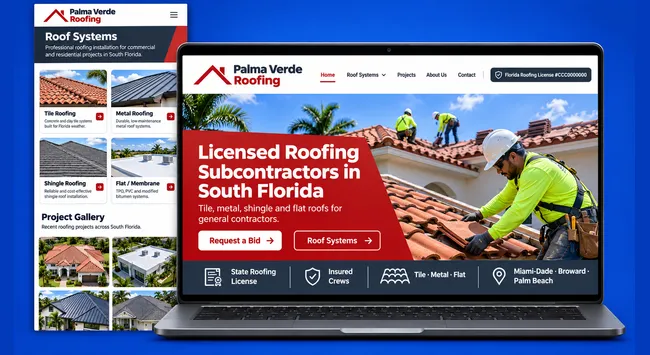
So the work is not one big move. It is making sure that the name, phone number, trade and counties match everywhere a GC might land. Our guide on how a website and a platform profile work together goes into the profile side, and the subcontractor website page shows the full set of pieces.
Which website passes prequalification?
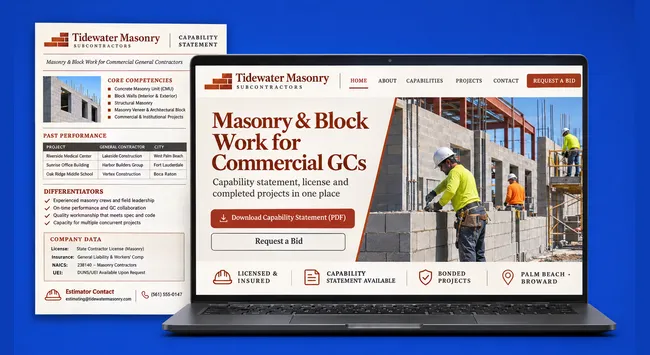
One that answers the checklist before anyone asks: an active license in the right category, proof of insurance, finished jobs similar to the one being priced, the size of the crew and the counties covered, and a form that takes plans. Whatever is missing usually becomes an email from the estimator, or an invitation that goes to someone else.
These guides cover the details. The prequalification checklist a GC runs lists each item and where it belongs on a page. The bid request form that accepts plans explains how a request gets from the site to your estimator with the files attached.
Prequalification is about trust, so the site also has to look current. A license number that has changed, a phone that no longer rings or a gallery that stops years ago all tell the estimator that the company may be hard to reach. If you would like us to read your site the way an estimator does, we can do it together: book a free 30-minute call.
What do the Google Business Profile and reviews add?
The profile is what Google shows on Maps and beside a search for your company name. It carries your category, service area, hours, photos and reviews, and an estimator can read it in seconds. Reviews add something a website cannot: what other people said after working with you.
For a trade company that serves GCs, the profile and the reviews usually work as a second opinion. The estimator already has your claims from the site; the profile is where they see whether outsiders agree. Our guide to the Google Business Profile for subcontractors covers the category, the service area by county and how to request reviews without any incentive, which Google's policy rules out.
Searches on Maps are local. A GC looking near Broward sees a different map from one working in Palm Beach County, which is why we write separate pages for web design in Fort Lauderdale and web design in West Palm Beach. Your service area on the profile should say where you really work.
What does automatic follow-up on unanswered bids do?
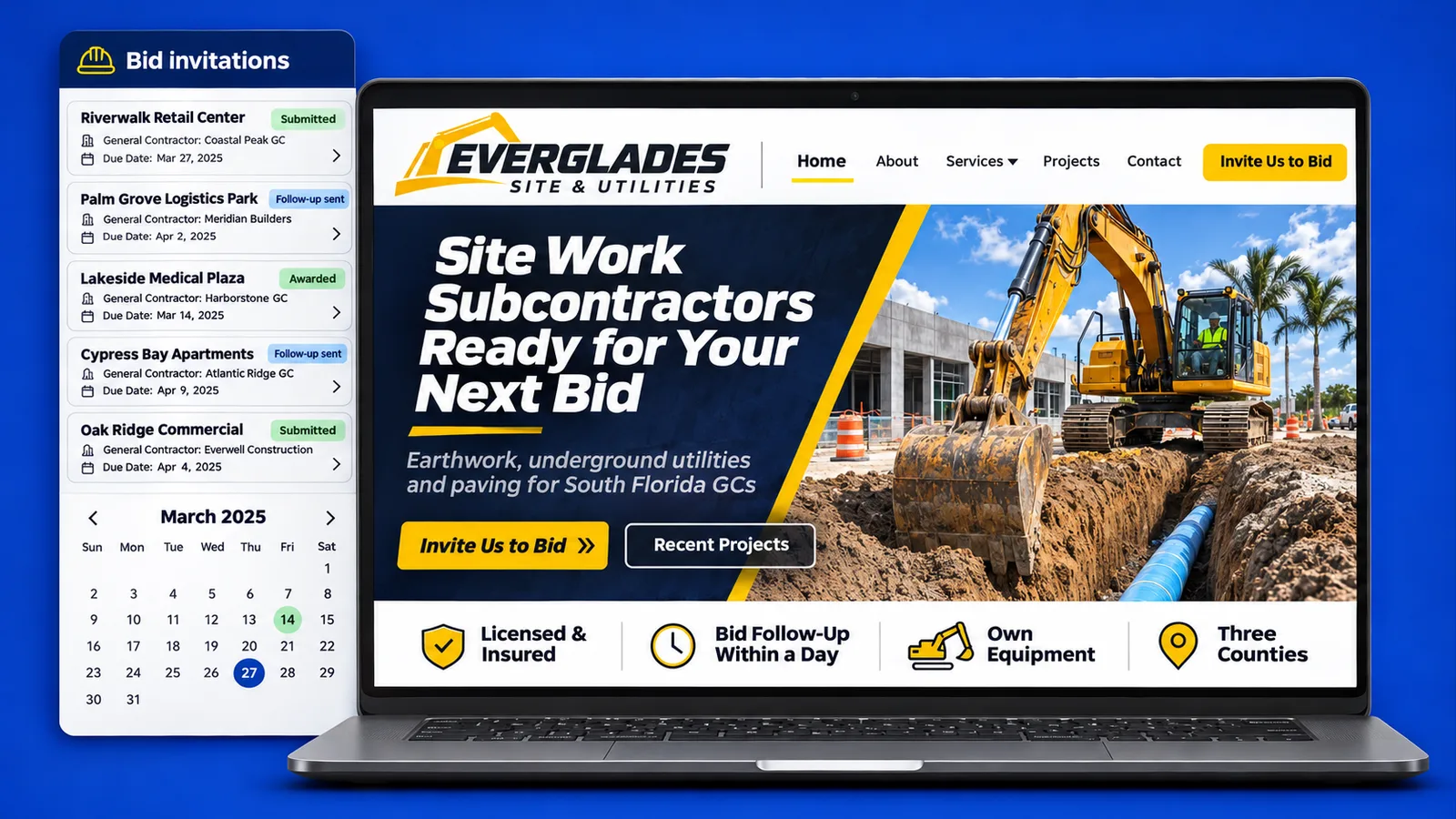
It schedules a reminder for your estimator after the bid's due date, records every message it sends and tells you when a reply comes in. Nothing is guessed: it follows rules you set, so a quote that got no answer is not forgotten between other jobs.
Most subs send a price and then wait. Following up depends on someone remembering, and during a busy week that someone is on a roof or on the phone. A simple flow can do the remembering. Its job is limited and visible:
- A scheduled reminder. When the due date passes with no reply, the estimator receives a note listing the bid, the contact and what was sent.
- A record of each send. Every reminder is logged with its date, so the office can see what went out and what did not.
- A notice when a reply arrives. The person who owns the bid hears about it right away instead of finding it later in a shared inbox.
This is a small piece of workflow automation. We do not claim it changes how often a GC replies; that depends on the GC. What it can do is make sure your side of the conversation is never the one that dropped.
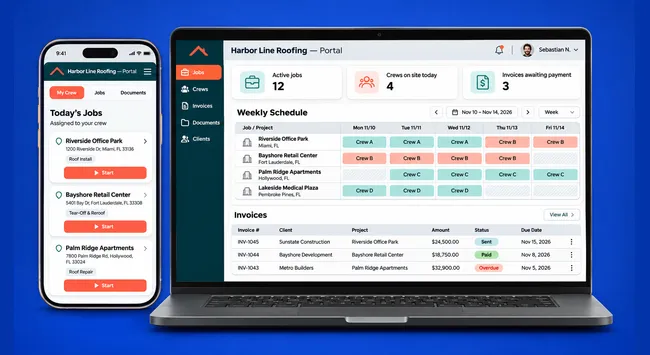
Winning the bid is a different job from running the work afterward. For that, SENAVIA builds GQM Connect, the admin panel of a South Florida general and roofing contractor (shown with sample data), where each subcontractor signs in to see the jobs and tasks assigned to them.
What does not depend on you?
Several things that decide who gets invited sit outside your company: the GC's own bidders list, the schedule of the project, the prices the other subs send and how many subs of your trade the GC will accept. A well-built online presence does not move any of those.
- The GC's list. It may already be full of companies the GC trusts, or limited by the owner's requirements.
- The project calendar. A job can be postponed, redesigned or awarded before your quote is read.
- The other bids. Your price is compared with prices you will never see.
- The cap on subs per trade. Some GCs invite only a few per scope, however good the rest look.
That is why we describe this as a map and not a promise. A clear site, matching profiles, honest reviews and reliable follow-up remove reasons to be passed over. They cannot create an invitation that the GC was never going to send. If you want help deciding which of these pieces your company is missing, go through them on a free 30-minute call, which you can book at any time.
Frequently asked questions about how to get more bid invitations
Which piece should a small sub fix first?
Usually the one an estimator meets first. If invitations arrive through a platform, start with that profile and the page it points to. If they come by name, check what Google shows when someone types your company in, and correct anything out of date.
Can I ask a GC for a review?
You can ask, as long as you do not offer money, a discount or a better spot on a bidders list in exchange. A review should describe the real job. If the GC prefers not to post one, a short reference they will give by phone still helps.
Is it a problem if my follow-up message goes out automatically?
In the flow described here it does not go out on its own: what goes out automatically is the reminder to your estimator, who decides whether to contact the GC, what to say and when. The GC receives a message written by a person; the flow only records that it was sent and watches for the reply.