Table of Contents Tabla de Contenido
- What You Will Learn in This Article
- Why Single-Channel Marketing Underperforms
- The Four Stages of the Modern Lead Generation Funnel
- Stage 1: Awareness — Getting Discovered Before Buyers Search
- Stage 2: Consideration — Winning the Research Phase
- Stage 3: Intent — Capturing the Lead at Decision Moment
- Stage 4: Decision — Tipping the Final Choice
- Budget Allocation Across the Integrated Funnel
- Measuring Integrated Funnel ROI
- Frequently Asked Questions
- Conclusion
Most businesses treat their digital marketing channels as separate campaigns: SEO runs in one silo, Google Ads in another, Meta Ads in a third. The result is a disjointed marketing effort where each channel competes for budget rather than reinforcing the others. The businesses generating the highest ROI from digital marketing in 2026 — including the fastest-growing service businesses in South Florida — think in funnels, not channels. They combine SEO, AEO, Google Ads, and Meta Ads into a coordinated system where each channel handles a specific role in moving buyers from first awareness to paying client. This guide explains exactly how to build that system.
What You Will Learn in This Article
- Why single-channel marketing underperforms integrated funnels
- The four stages of the modern lead generation funnel
- The specific role of SEO, AEO, Google Ads, and Meta Ads at each stage
- How to connect channels for seamless buyer journey coverage
- Budget allocation across the integrated funnel
- How to measure funnel performance and calculate true ROI
- A practical integrated funnel template for South Florida service businesses
Why Single-Channel Marketing Underperforms
Single-channel marketing fails for a simple reason: buyers do not make decisions in one step. The typical journey for a South Florida business owner hiring a digital marketing agency looks like this: they see a social media post that introduces the concept of AEO → they Google "AEO agency South Florida" to research options → they read three blog posts and a case study → they ask ChatGPT which agency to use → they visit two websites → they are retargeted on Instagram → they request a proposal from the agency that appeared in every step of their research.
An agency that only runs Google Ads will capture this buyer at the search stage but loses them if someone else retargets them. An agency that only does SEO will be found during research but may not appear in AI search or on social media. Only the agency that appears consistently across all stages of the buyer journey has the highest probability of winning the engagement. Multiple touchpoints are not optional — research consistently shows that buyers who encounter a brand 5-7 times before purchasing have significantly higher close rates than first-touch buyers.
The Four Stages of the Modern Lead Generation Funnel
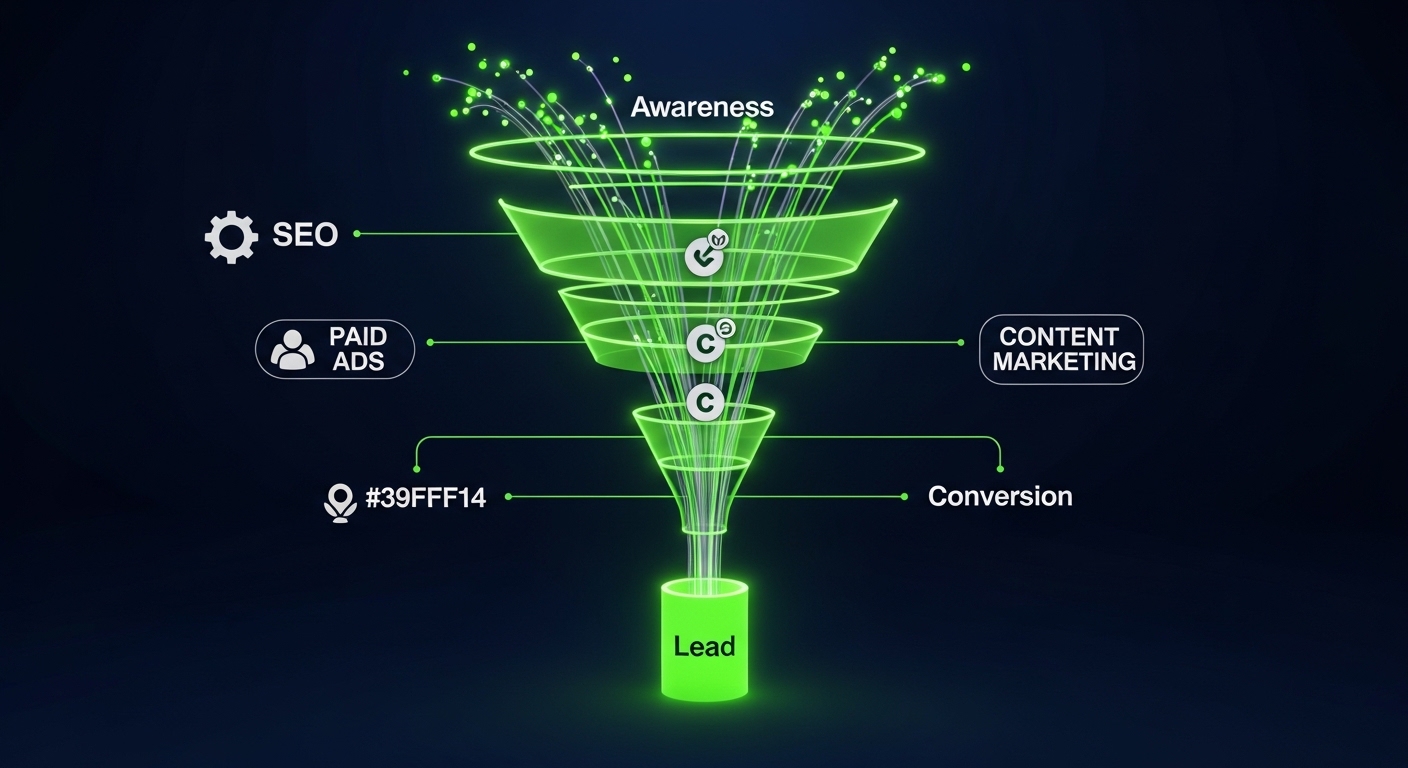
The integrated lead generation funnel has four distinct stages, each requiring different channels and content types:
| Stage | Buyer State | Goal | Primary Channels |
|---|---|---|---|
| Awareness | Does not know you exist, may not know the problem exists | Create first impression, build recognition | Meta Ads (prospecting), SEO (informational content), AEO (AI mentions) |
| Consideration | Researching options, comparing providers | Demonstrate expertise, earn trust | SEO (comparison and educational content), AEO (AI citations), Google Ads (branded), Meta Ads (retargeting) |
| Intent | Ready to contact or hire someone | Capture the lead at the decision moment | Google Ads (high-intent keywords), Meta Ads (retargeting with offer), Landing page CRO |
| Decision | Choosing between 2-3 finalists | Tip the decision in your favor | Meta Ads (testimonials, case studies), Email follow-up, SEO (trust content) |
Stage 1: Awareness — Getting Discovered Before Buyers Search
The awareness stage is where most service businesses underinvest. They focus on capturing demand but neglect to create it, meaning they are only visible to buyers who already know what they need — a shrinking portion of their total addressable market.
AEO in Awareness
Answer Engine Optimization is increasingly the first touchpoint in the awareness stage. When a business owner in Broward County asks ChatGPT "how can I get more clients for my HVAC company?" and your agency is cited in the response, that is an awareness touchpoint with zero cost per impression. Building AEO authority in your topic area creates an always-on awareness channel that operates without an advertising budget.
Meta Ads in Awareness
Meta's prospecting campaigns — shown to people who match your target audience profile but have not visited your site — are the most efficient paid awareness channel for most local businesses. A well-targeted Meta campaign reaching business owners in specific South Florida zip codes, within relevant income and interest brackets, creates brand recognition that compounds over time: the same audience sees your name repeatedly before they ever have a specific need.
SEO Informational Content
Long-form blog content targeting informational keywords ("what is AEO?", "how does Google Ads work?", "why is my website not generating leads?") captures buyers at the beginning of their research journey and introduces them to your brand before they have comparison-shopped. This content also fuels AEO — well-structured educational articles are the primary type AI engines select for informational query citations.
Stage 2: Consideration — Winning the Research Phase
During consideration, buyers are actively comparing options. They are reading reviews, visiting multiple websites, asking peers for recommendations, and now — increasingly — asking AI engines for objective comparisons. This stage is where most lost deals are decided.
SEO and AEO in Consideration
Comparison content performs best in consideration: "Agency X vs Agency Y," "What to look for in a South Florida digital marketing agency," "Google Ads agency questions to ask before hiring." These posts rank for comparison searches and get cited by AI engines when buyers ask for objective guidance. Case studies with specific, measurable results ("Generated 84 qualified leads in 60 days for a Plantation FL HVAC company") are the most powerful consideration-stage content because they provide verifiable evidence of outcome.
Google Ads in Consideration
Branded Google Ads — bidding on your own company name and close variations — protect your brand in consideration. When a buyer who saw your Meta ad now Googles your name to research further, branded search ads ensure you appear prominently with controlled messaging rather than letting a competitor ad appear in your branded search results. Branded CPCs are typically 90% lower than competitor keyword CPCs, making this one of the highest-ROI Google Ads investments.
Meta Retargeting in Consideration
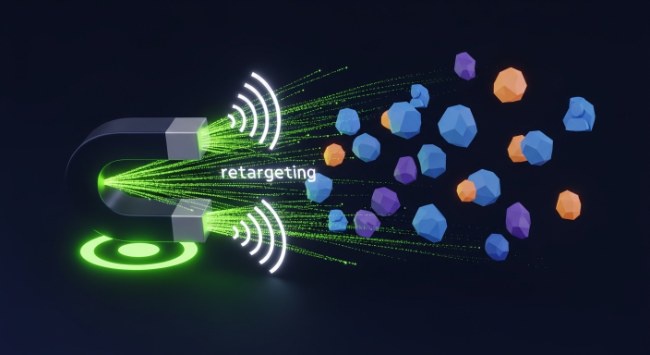
Retargeting ads shown to people who have visited your website but not converted are the highest-performing Meta campaigns for most businesses. At the consideration stage, retargeting should show case study highlights, specific result numbers, testimonial videos, and social proof — the trust signals that overcome the lingering hesitation of a buyer who is interested but not yet committed.
Stage 3: Intent — Capturing the Lead at Decision Moment
The intent stage is where buyers are actively looking to act. They are searching "hire Google Ads agency Fort Lauderdale," requesting proposals, or asking their network for a recommendation. This is the stage Google Ads dominates — and where landing page conversion rate determines how many of these high-intent buyers become leads.
Google Ads for High-Intent Keywords
High-intent keywords — those including words like "hire," "near me," "pricing," "quote," "best," "agency," "company" — signal a buyer ready to act. These keywords have higher CPCs but generate leads that close at significantly higher rates. For a Miami-Dade digital marketing agency, keywords like "Google Ads management South Florida," "Webflow agency Miami," and "SEO company Broward County" target buyers in the final decision phase.
Meta Ads for Intent Reinforcement
At the intent stage, Meta retargeting should shift from educational to urgency-focused: limited availability messaging, specific offers (free audit, free consultation), and strong testimonials from recognizable local clients. A potential client who has visited your website three times and then sees a Meta ad offering a free strategy session for South Florida businesses is in a position to convert.
Stage 4: Decision — Tipping the Final Choice
Decision-stage buyers have narrowed to 2-3 options and are making their final evaluation. The factors that tip the decision are usually: specific results evidence, peer recommendations, perceived trustworthiness, and responsiveness. Your marketing can influence the first three.
Detailed Case Studies
A case study page for a recognizable South Florida client — "How we helped a Boca Raton dental practice generate 73 new patient leads in 45 days" — is more persuasive to a South Florida dental practice owner evaluating you than any amount of general claims. Decision-stage buyers respond to specificity and geographic or industry relevance.
Review Generation and Management
Google Business Profile reviews appear in Google Ads, Google Maps, and organic search for branded queries. A prospect searching your company name at the decision stage sees your star rating and reads recent reviews. A consistent review generation strategy — asking satisfied clients to leave a Google review immediately after a positive milestone in the engagement — is one of the highest-ROI conversion activities available to local businesses.
Budget Allocation Across the Integrated Funnel
Here is a practical budget allocation framework for a South Florida service business with a $5,000/month total digital marketing budget:
| Channel | Budget Allocation | Monthly Budget ($5k) | Primary Funnel Stage |
|---|---|---|---|
| Google Ads (high-intent) | 40% | $2,000 | Intent / Decision |
| Meta Ads (retargeting) | 15% | $750 | Consideration / Decision |
| Meta Ads (prospecting) | 10% | $500 | Awareness |
| SEO / AEO content | 25% | $1,250 | Awareness / Consideration |
| CRO and landing pages | 10% | $500 | All stages (conversion) |
As monthly budget grows, scale Google Ads and Meta prospecting proportionally while maintaining the SEO content investment — it compounds over time and reduces dependence on paid channels as organic authority grows.
Measuring Integrated Funnel ROI
Measuring an integrated funnel requires multi-touch attribution — tracking which channels contributed to a conversion, not just which channel gets the last click. Google Analytics 4's data-driven attribution model automatically distributes credit across all touchpoints in the buyer journey. Set up cross-channel tracking with UTM parameters on all paid ads, consistent Google Analytics conversion events, and call tracking integrated with your CRM to connect the full revenue impact of each channel.
The key integrated funnel metric is cost per acquired client (not cost per lead) — the total marketing spend divided by the number of leads that closed into paying clients. This is typically 30-50% lower for integrated funnel strategies than for single-channel campaigns because each channel reduces lead attrition that would otherwise be unrecovered.
Frequently Asked Questions
What is a lead generation funnel?
A lead generation funnel is a systematic marketing framework that moves potential customers through sequential stages — Awareness, Consideration, Intent, and Decision — using different channels and content types at each stage. An integrated lead generation funnel combines SEO, AEO, Google Ads, and Meta Ads so that buyers encounter your brand consistently throughout their entire buying journey, maximizing the probability of conversion.
Do I need all four channels (SEO, AEO, Google Ads, Meta Ads) to build an effective funnel?
Not necessarily at first. Start with Google Ads (for intent capture) and Meta retargeting (for consideration stage), then layer in SEO and AEO content as your budget allows. The full integrated funnel produces the highest ROI, but a two-channel Google + Meta retargeting approach is effective for most service businesses starting their paid advertising strategy.
How do SEO and AEO fit into a paid advertising funnel?
SEO and AEO handle the awareness and consideration stages that paid ads handle less efficiently. Paid ads stop generating leads the moment you stop spending; SEO and AEO generate organic leads from content that remains published indefinitely. Over 12-24 months, SEO and AEO content progressively reduces your cost per lead by generating an increasing share of total leads without incremental ad spend.
How do I know which part of my funnel is leaking the most leads?
Map your funnel conversion rates at each stage: traffic to landing page (click-through rate), landing page to lead (conversion rate), lead to proposal (sales qualification rate), and proposal to client (close rate). The stage with the lowest conversion rate is your biggest opportunity. Most South Florida service businesses have their biggest leak at the landing page to lead stage — a CRO problem — rather than at the traffic stage.
Conclusion
The most effective lead generation strategy for South Florida businesses in 2026 is not a single channel — it is an integrated funnel where AEO creates AI-powered awareness, SEO captures research-phase buyers, Google Ads intercepts high-intent searchers, and Meta Ads retargets warm audiences back to conversion. Each channel reinforces the others, reducing lead attrition at every funnel stage and compounding ROI over time. At SENAVIA Corp, we design and manage integrated lead generation funnels for businesses across Broward, Miami-Dade, and Palm Beach counties. Contact us today for a free funnel audit — we will identify exactly where your current marketing is losing leads and how to recapture them.