Table of Contents Tabla de Contenido
- What You Will Learn in This Article
- Why Most Business Websites Fail to Convert
- The SENAVIA Conversion Framework: 7 Core Principles
- Landing Page Architecture That Drives Form Completions
- Mobile Conversion Optimization for South Florida
- Measuring and Improving Your Conversion Rate
- Frequently Asked Questions
- Conclusion
Most business websites are digital brochures. They look professional, they describe services, they have a contact form buried on a back page — and then they sit quietly, generating almost no leads. The average website conversion rate across industries is 2.35%, meaning 97 out of every 100 visitors leave without taking any action. But the top 25% of websites convert at 5.3% or higher, and the top 10% convert at over 11%. The difference is not design talent or brand budget — it is a systematic approach to conversion architecture. This guide teaches you the framework SENAVIA Corp uses to build websites for South Florida businesses that turn visitors into paying clients.
What You Will Learn in This Article
- Why most business websites fail to generate leads
- The SENAVIA Conversion Framework (7 core principles)
- How page speed directly affects your conversion rate
- Landing page architecture that drives form completions
- Social proof elements that overcome buyer hesitation
- Mobile conversion optimization for South Florida audiences
- How to test, measure, and continuously improve your conversion rate
Why Most Business Websites Fail to Convert
Before building a conversion-focused website, you need to understand the most common failure modes. In our work with businesses across Broward, Miami-Dade, and Palm Beach counties, these are the seven patterns we see most consistently:
Failure 1: No Clear Primary Action
Visitors land on a page and see four different CTAs: "Call us," "Email us," "Get a quote," "Learn more," "View our portfolio," "Subscribe to our newsletter." When everything is prioritized, nothing is. Every page on your website should have one primary action — the single most important thing you want the visitor to do — and everything else should be secondary.
Failure 2: Slow Page Load Time
Every extra second of load time costs 7% of your conversions. A site that loads in 3 seconds instead of 1 second is already losing 14% of potential conversions before the visitor has seen anything. At 6 seconds, conversion rates drop to less than half of what they are at 1 second. For South Florida businesses where mobile traffic from busy users checking phones on the go dominates, speed is non-negotiable.
Failure 3: Weak Value Proposition
A visitor should understand within 5 seconds of landing on your page: what you do, who you do it for, and why you are the right choice. Most business websites bury this in paragraph three, after a hero image caption and a welcome message. If someone has to work to understand why they should hire you, they will not.
Failure 4: Friction-Heavy Forms
Multi-field contact forms that ask for name, company, phone, email, budget, timeline, how they heard about you, and a message create significant friction. Research shows that reducing form fields from 11 to 4 increases completion rates by up to 120%. Multi-step forms — where each step asks for fewer fields — convert 14% better than single long forms by reducing perceived effort.
Failure 5: No Social Proof
Buyers do not trust what businesses say about themselves — they trust what other customers say. A website without testimonials, case studies, client logos, or review badges is asking visitors to trust an unknown entity based on professional claims alone. Social proof is the conversion multiplier that bridges the gap between "this looks good" and "I'm going to call."
Failure 6: Poor Mobile Experience
Over 60% of website traffic is mobile, and mobile conversion rates are significantly lower than desktop when the site is not mobile-optimized. For South Florida businesses, where a large portion of your audience is on phones, a desktop-first design that just scales down is not enough — mobile needs dedicated layout decisions, thumb-friendly tap targets, and forms optimized for phone keyboards.
Failure 7: No Follow-Up System
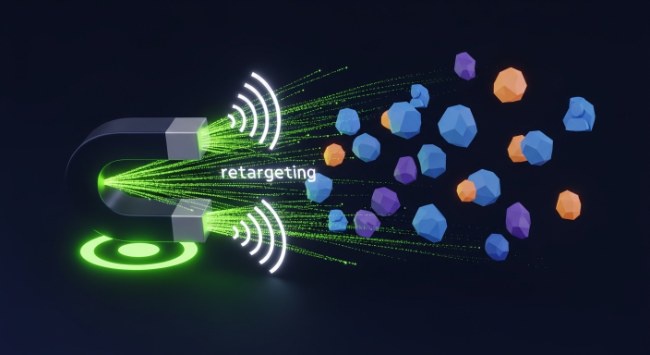
Most businesses focus entirely on driving visitors to their site but have no system for visitors who are not ready to convert on first visit. Without retargeting ads, email capture, and follow-up sequences, you lose 97% of visitors permanently. A conversion-optimized website is part of a conversion ecosystem that recaptures and nurtures leads over time.
The SENAVIA Conversion Framework: 7 Core Principles
At SENAVIA Corp, we apply seven core principles to every website we build for South Florida businesses. These principles consistently produce conversion rates 2-4x above industry average when applied together.
Principle 1: Message-Market Match
The words on your website must reflect exactly how your target customer describes their problem and the outcome they want. Not how you describe your service internally — how they describe it to a friend. "We provide comprehensive digital marketing solutions" does not match how a business owner in Plantation, FL thinks. "We help South Florida service businesses get more leads from Google" matches perfectly. Interview your best customers, use their exact words, and build your messaging around them.
Principle 2: The 5-Second Test
Your homepage hero section (the area visible without scrolling) must pass the 5-second test: a first-time visitor should understand within 5 seconds who you help, what you do for them, and what to do next. A clear H1 heading that names the benefit, a sub-heading that adds context, and one prominent CTA button are the only three elements needed in the hero. Complexity kills conversion.
Principle 3: Trust Architecture
Layer trust signals progressively throughout the page. Near the top: client logos, Google Partner badge, or recognizable certifications. In the middle: specific case study results with numbers ("Generated 47 qualified leads in 30 days for a Miami HVAC company"). Near the bottom: detailed testimonials with names, photos, and company. Closing: a guarantee or risk-reducer ("Free consultation — no commitment required"). Each layer reduces buyer hesitation as they scroll.
Principle 4: Friction-Free Conversion Paths
Map every route a visitor might take to becoming a lead and systematically reduce friction in each one. Primary path: hero CTA → landing page → short form → confirmation page. Secondary path: scroll to learn more → case studies → contact form → confirmation. Emergency path: phone number visible in header (click-to-call on mobile) for visitors who are ready to call now. Every extra click, every unnecessary form field, every broken mobile button between the visitor and the conversion costs you leads.
Principle 5: Specificity Sells
Vague claims reduce conversion. Specific claims increase it. "We've helped over 150 South Florida businesses" outperforms "We have extensive experience." "Average client sees a 3.2x increase in qualified leads within 90 days" outperforms "We deliver results." Use specific numbers wherever possible — even approximate ranges are more convincing than general statements. This specificity principle applies to CTAs too: "Get my free website audit" converts better than "Contact us."
Principle 6: Speed as a Conversion Tool
A site loading in 1 second achieves an average conversion rate of 39%. At 6 seconds, that drops to 18%. In Webflow — the platform SENAVIA uses for client sites — achieving sub-2-second load times is standard when the site is built correctly: optimized images, minimal external scripts, proper caching, and a global CDN. Core Web Vitals (Largest Contentful Paint, Cumulative Layout Shift, Interaction to Next Paint) directly measure the speed and stability elements that affect conversion.
Principle 7: Continuous Testing
A conversion-optimized website is never finished. The best-performing pages are the result of continuous A/B testing: two versions of a headline tested simultaneously, form length variations, CTA button color and copy tests, social proof placement tests. Teams combining A/B testing with AI-assisted variant generation run 4.7x more experiments per quarter and achieve a 31% higher test-to-win ratio than teams using manual A/B testing alone. Build testing into your website operations from day one.
Landing Page Architecture That Drives Form Completions
For service businesses, dedicated landing pages — pages designed for one specific offer or audience segment, separate from the main website — consistently outperform general homepage traffic for lead generation. Here is the optimal structure:
The High-Converting Landing Page Structure
- Headline: Specific benefit, not feature. "Get 3x More Qualified Leads from Google in 90 Days" not "Digital Marketing Services"
- Sub-headline: Clarify who it's for and the key differentiator. "For South Florida service businesses ready to scale with proven paid and organic strategies"
- Hero image or video: Show the outcome, not the process. Happy client, impressive results dashboard, or team in action
- Primary CTA: Above the fold, action-oriented, specific. "Book My Free Strategy Call"
- 3 core benefits: Why you, what results, what makes it different — each in 1 sentence
- Social proof block: 1-3 short testimonials with names and photos at minimum
- Lead capture form: 3-5 fields maximum. Name, email, phone, and one qualifying question
- Trust signals footer: Certifications, media mentions, privacy statement
Mobile Conversion Optimization for South Florida
South Florida's tech-savvy, mobile-first population means that your mobile conversion rate can make or break your lead generation results. Key mobile-specific optimizations:
- Sticky call button: A floating phone icon that stays visible as the user scrolls converts mobile visitors who prefer calling to filling out forms
- Thumb-zone CTAs: Place primary buttons in the lower third of the mobile screen — the natural thumb reach zone
- Auto-fill enabled forms: HTML autocomplete attributes let browsers fill form fields automatically, reducing friction dramatically on mobile
- Large tap targets: Buttons and links need a minimum 44px tap area to prevent mis-taps and frustration
- Single-column layout: Multi-column content that requires horizontal scrolling destroys mobile conversion; everything should stack vertically
Measuring and Improving Your Conversion Rate
You cannot improve what you do not measure. Here is the measurement stack every conversion-focused website needs:
Essential Tracking Setup
- Google Analytics 4: Track form submissions, phone call clicks, page engagement, and traffic sources as conversion events
- Google Search Console: Monitor which search queries drive traffic and which pages have high impression/low click rates (CTR issues to fix)
- Heat mapping (Hotjar or Microsoft Clarity): See exactly where visitors scroll, click, and abandon — identifies friction points invisible in analytics alone
- A/B testing tool: Google Optimize (free) or VWO for running headline and CTA tests
- Call tracking: A local South Florida number that routes calls and records which page and ad source triggered each call
Key Metrics to Track Weekly
| Metric | Where to Find It | Benchmark (Service Businesses) |
|---|---|---|
| Overall conversion rate | GA4: Conversions / Sessions | 3–7% is good; 10%+ is excellent |
| Form completion rate | GA4: Form submit events | 25–40% of form-page visitors |
| Page load time (Core Web Vitals) | Google Search Console | LCP under 2.5s; INP under 200ms |
| Mobile vs desktop conversion rate | GA4: Device category segment | Mobile should be within 20% of desktop |
| Traffic source conversion rate | GA4: Source/medium segments | Organic and paid should both convert >2% |
Frequently Asked Questions
What is a good website conversion rate for a South Florida service business?
A good conversion rate for a South Florida service business website is 3–7% of all visitors completing a desired action (form submission, phone call, or appointment booking). The median across all industries is 2.35%. Top-performing service business websites with dedicated landing pages and strong social proof regularly achieve 8–12%.
How much does it cost to build a high-converting website in South Florida?
A professionally built, conversion-optimized website for a South Florida service business typically costs between $4,000 and $15,000 depending on complexity, number of pages, custom integrations, and the platform used. Webflow sites in this range include mobile optimization, speed optimization, basic CRO architecture, and analytics setup. Higher-tier projects with custom development, advanced integrations, or e-commerce features range from $15,000 to $50,000+.
Should I use a landing page or my homepage for paid ads?
Use a dedicated landing page for paid ads — always. Homepages are designed for browsers exploring your business; landing pages are designed for buyers responding to a specific offer. Sending paid traffic to a homepage typically produces conversion rates 50–70% lower than sending the same traffic to a dedicated, message-matched landing page. The investment in building the landing page pays for itself within the first month of reduced CPL.
How long does it take to see conversion rate improvements after a website redesign?
Measurable conversion rate improvements from a redesign are typically visible within 30 days. Full optimization, where you have run A/B tests on key elements and made data-driven adjustments, typically takes 60–90 days. Some improvements — particularly speed optimizations and mobile fixes — show results almost immediately in both bounce rate and conversion rate.
Conclusion
Building a website that converts visitors into paying clients is not about having the most beautiful design — it is about applying systematic conversion architecture: clear messaging, fast load times, minimal friction, layered trust, and continuous testing. The businesses in South Florida that treat their website as a conversion engine — not a digital brochure — consistently outperform competitors who invest heavily in driving traffic to sites that cannot convert it. At SENAVIA Corp, we design and build Webflow websites engineered for conversion for businesses across Broward, Miami-Dade, and Palm Beach counties. Contact us today for a free conversion audit of your current website — we will show you exactly what is costing you leads and what it would take to fix it.